Maximizing ROI with Data-Driven Marketing Campaigns

Transform your marketing efforts with powerful data-driven strategies that not only enhance targeting but also significantly increase your return on investment.
Maximizing ROI with Data-Driven Marketing Campaigns
In today’s competitive landscape, marketing without data is guesswork. Budgets are tighter, competition is sharper, and leadership expects measurable impact. The solution? Data-driven marketing campaigns that prioritize performance, accountability, and scalable growth.
Maximizing ROI in 2026 isn’t about spending more — it’s about spending smarter.
Here’s how high-performing teams are doing it.
Why Data-Driven Marketing Matters More Than Ever
Data-driven marketing uses analytics, behavioral insights, and performance tracking to guide decisions at every stage of a campaign — from audience targeting to creative optimization to conversion tracking.
When done correctly, it delivers:
-
Higher conversion rates
-
Lower customer acquisition costs (CAC)
-
Better audience targeting
-
Improved campaign scalability
-
Clear attribution and ROI reporting
Organizations that leverage data effectively outperform competitors because they reduce wasted spend and double down on what works.
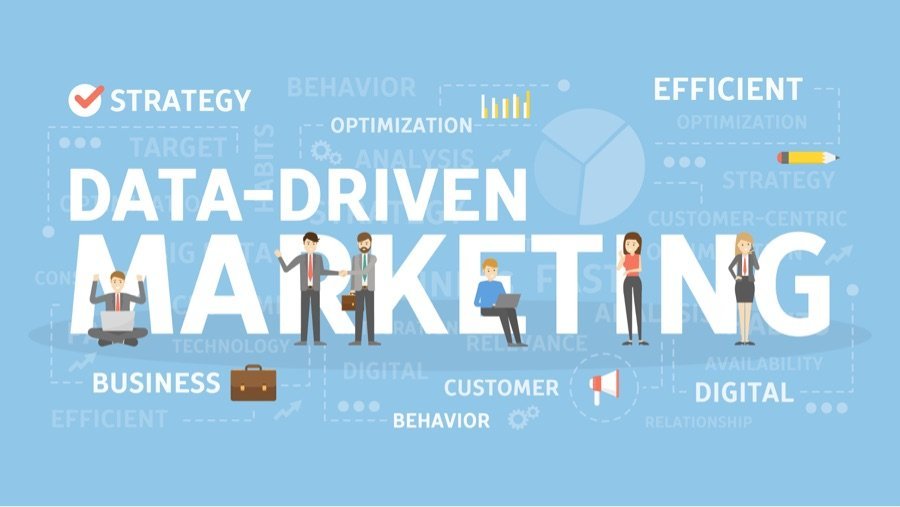
Maximizing ROI with Data-Driven Marketing Campaigns
In today’s competitive landscape, marketing without data is guesswork. Budgets are tighter, competition is sharper, and leadership expects measurable impact. The solution? Data-driven marketing campaigns that prioritize performance, accountability, and scalable growth.
Maximizing ROI in 2026 isn’t about spending more — it’s about spending smarter.
Here’s how high-performing teams are doing it.
Why it Matters More Than Ever
Why Data-Driven Marketing Matters More Than Ever
Data-driven marketing uses analytics, behavioral insights, and performance tracking to guide decisions at every stage of a campaign — from audience targeting to creative optimization to conversion tracking.
When done correctly, it delivers:
-
Higher conversion rates
-
Lower customer acquisition costs (CAC)
-
Better audience targeting
-
Improved campaign scalability
-
Clear attribution and ROI reporting
Organizations that leverage data effectively outperform competitors because they reduce wasted spend and double down on what works.
Star with Clear Revenue-Focused Goals
Every successful campaign begins with defined KPIs tied directly to business outcomes.
Instead of vague goals like “increase engagement,” focus on measurable objectives such as:
-
Cost per lead (CPL)
-
Customer acquisition cost (CAC)
-
Return on ad spend (ROAS)
-
Customer lifetime value (LTV)
-
Pipeline contribution
When marketing aligns with revenue metrics, optimization becomes straightforward — scale profitable channels, cut underperformers.
Build a Reliable Data Infrastructure
You cannot optimize what you cannot measure.
High-ROI campaigns rely on:
-
Accurate tracking pixels and conversion APIs
-
CRM integration for lead-to-sale attribution
-
Clean UTM structures
-
Centralized dashboards (e.g., GA4, data warehouses, BI tools)
Without clean data, decisions become flawed. Regular audits of tracking systems prevent revenue leaks and attribution gaps.
Use Audience Segmentation to Increase Precision
Broad targeting wastes budget. Precision targeting increases ROI.
Modern campaigns segment audiences by:
-
Behavioral data (site visits, engagement depth)
-
Purchase history
-
Funnel stage
-
Industry or demographics
-
Predictive intent signals
Segmented messaging increases relevance — and relevance increases conversion rates.
Data Driven Marketing
Data-driven marketing is built on structured experimentation.
What to test:
-
Creative formats (video vs. static)
-
Messaging angles
-
Call-to-action variations
-
Landing page layouts
-
Offer structures
-
Audience subsets
Use controlled A/B testing frameworks and allow sufficient data before drawing conclusions. Small incremental gains across multiple variables compound into significant ROI improvements.
Optimize for Full Funnel Performance
Many campaigns fail because they focus only on top-of-funnel metrics like clicks or impressions.
Maximizing ROI requires full-funnel optimization:
Top of Funnel: Awareness & engagement
Middle of Funnel: Lead quality & nurturing
Bottom of Funnel: Conversion & revenue
High-performing teams analyze drop-off points and continuously refine each stage to reduce friction.
Leverage Predictive Analytics and AI
In 2026, predictive modeling plays a key role in performance marketing.
Advanced tools can:
-
Identify high-value customer profiles
-
Forecast campaign performance
-
Predict churn probability
-
Automate bid adjustments
-
Personalize content dynamically
AI enhances decision-making — but human oversight ensures strategy remains aligned with brand and business goals.
Prioritize Conversion rate Optimization (CRO)
Driving traffic is only half the equation.
Improving on-site conversion rates can dramatically increase ROI without increasing ad spend.
Effective CRO includes:
-
Faster page load times
-
Clear value propositions
-
Social proof and testimonials
-
Simplified forms
-
Strong CTAs
-
Mobile-first design
Even a 10–20% lift in conversion rate can significantly improve campaign profitability.
Continually Analyze & Reallocate Budget
Continuously Analyze and Reallocate Budget
Data-driven teams review performance weekly — sometimes daily.
Ask:
-
Which campaigns exceed target ROAS?
-
Where is CAC rising?
-
Which audiences generate higher LTV?
-
Are diminishing returns setting in?
Budget should shift dynamically toward the highest-performing channels and segments.
Report Impact in Business Terms
Report Impact in Business Terms
Leadership doesn’t care about impressions. They care about revenue.
Translate marketing performance into:
-
Revenue generated
-
Pipeline influenced
-
Cost efficiency improvements
-
Forecasted growth
When marketing speaks the language of finance, it earns strategic influence.
Final Thoughts
Maximizing ROI with data-driven marketing campaigns is not about complex dashboards or flashy tools — it’s about disciplined strategy, structured testing, and continuous optimization.
The marketers who win in 2026 are those who:
-
Measure everything
-
Optimize consistently
-
Align with revenue
-
Adapt quickly
Data doesn’t replace creativity — it amplifies it. When insight meets execution, ROI follows.